A New Era in Retail Logistics: The Role of Drones and Emerging Technologies
[image_with_animation animation =”fade-in” image_url=”https://blog.tejaradirect.com/wp-content/uploads/2024/10/NTT137_fig2_wxakhj.jpg.avif” delay=””] [/image_with_animation]Table of Contents:
- Introduction
- Evolution of Retail Logistics: From Same-Day to 30-Minute Delivery
- The Rise of E-commerce and Its Impact on Logistics
- Walmart’s Drone Delivery Initiative: A Case Study
- How Drones Work: Understanding the Technology
- Key Players in Drone Delivery: Zipline and Beyond
- Drone Delivery Across Different Sectors
- Advantages and Challenges of Drone Deliveries
- Future Outlook for Drone Delivery and Retail Logistics
- Conclusion
- Sources
Introduction
The retail industry is undergoing a rapid transformation, and logistics has become the battleground where major retailers strive to outdo each other. Over the past decade, the demand for faster, more reliable delivery has become one of the primary competitive edges. From same-day delivery to the latest frontier of 30-minute drone deliveries, companies like Walmart are leading the charge to revolutionize logistics using cutting-edge technology.
This article explores the impact of emerging technologies like drones on retail logistics, looking at how major players are shaping the future and the potential benefits and challenges these innovations pose.
Evolution of Retail Logistics: From Same-Day to 30-Minute Delivery
Ten years ago, e-commerce was reshaping the retail landscape, with companies like Amazon setting new expectations for how quickly consumers could receive their orders. With Amazon Prime’s introduction of two-day shipping, competitors were forced to rethink their logistics strategies.
Fast forward to today, and the race is now about delivering goods even faster. While same-day delivery is still widely celebrated, companies are pushing boundaries by reducing delivery times to just 30 minutes. The key to this ambitious leap? Drone delivery systems.
The Rise of Fast Delivery
With consumers increasingly relying on online shopping for everything from groceries to electronics, fast delivery has gone from being a novelty to a necessity. Walmart, Target, and other retail giants have adapted by introducing various fulfillment models, including ship-from-store, curbside pickup, and dedicated local distribution centers.
[image_with_animation animation =”fade-in” image_url=”https://blog.tejaradirect.com/wp-content/uploads/2024/10/NTT137_fig3_xpk5hv.jpg.avif” delay=””] [/image_with_animation]
The Rise of E-commerce and Its Impact on Logistics
E-commerce has dramatically transformed how retailers think about logistics. What once took weeks now takes days or even hours. The convenience of shopping online is matched by the expectation of quick delivery. Companies like Amazon have invested billions into their logistics networks, developing their own fleet of delivery vehicles and investing in advanced warehouse robotics.
With the e-commerce market continuing to grow, logistics has become an integral part of the retail experience, driving customer satisfaction and repeat business. For traditional retailers to compete with giants like Amazon, adopting emerging technologies like drones is no longer optional—it’s essential.
Walmart’s Drone Delivery Initiative: A Case Study
Walmart has long been a leader in supply chain and logistics innovation, but their recent partnership with Zipline for drone deliveries marks a significant milestone in retail logistics. With a growing number of metropolitan areas covered by the service, including Seattle, Houston, and Dallas-Fort Worth, Walmart is leveraging cutting-edge drone technology to deliver goods within 30 minutes or less.
Partnership with Zipline
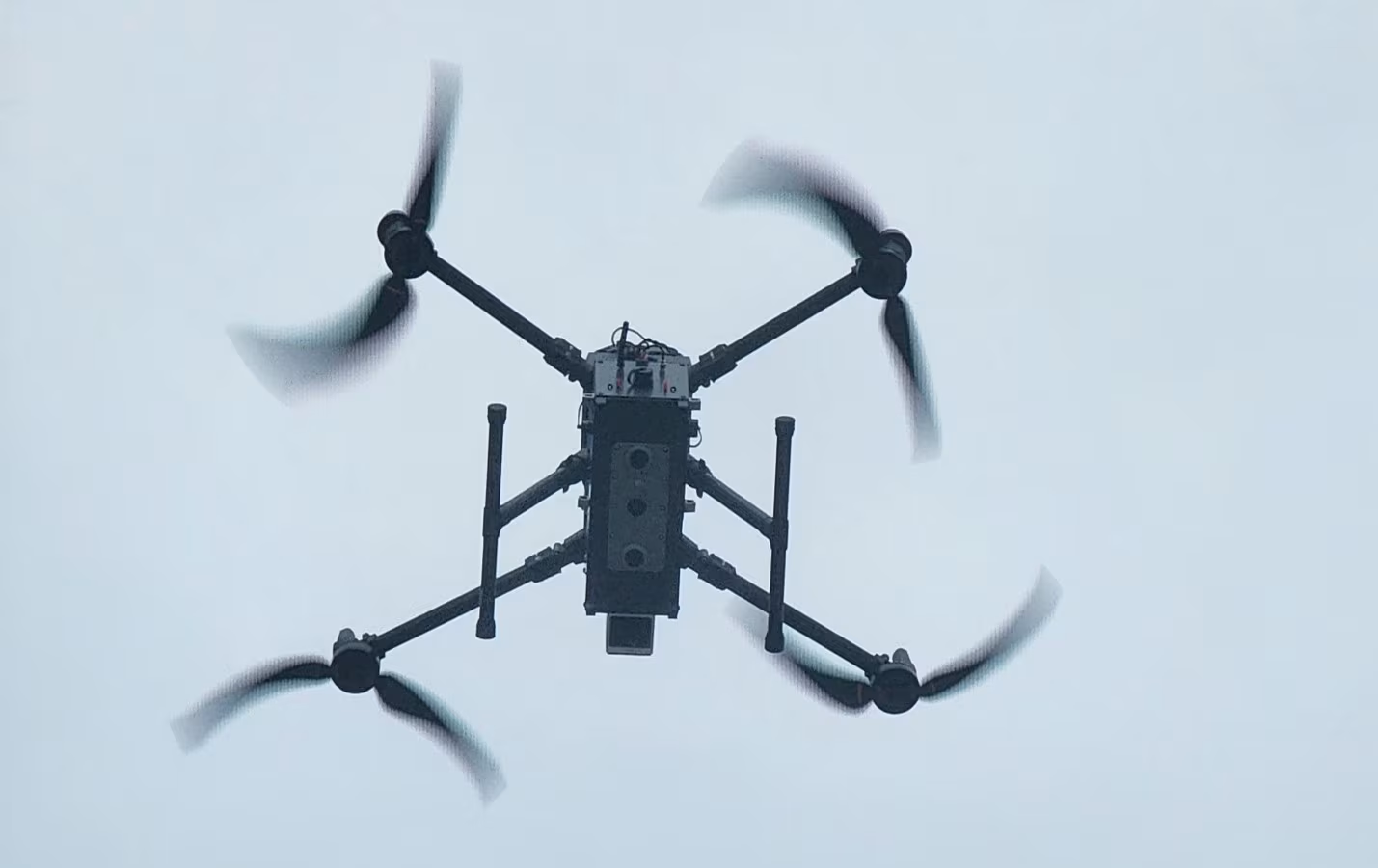
Zipline, known for its work in healthcare deliveries, has expanded its operations to retail, offering Walmart a way to cover large geographic areas quickly. The drones are equipped with lidar and GPS systems, which help them map the terrain and safely navigate obstacles such as trees, houses, and parked cars.
Walmart’s goal is to meet the growing demand for fast delivery while reducing the carbon footprint of its logistics operations. By using drones, the company can significantly cut down on vehicle emissions, fuel consumption, and traffic congestion, especially in urban areas.
How Drones Work: Understanding the Technology
Lidar and GPS in Autonomous Delivery
Drones rely on several advanced technologies to deliver goods accurately and efficiently. Lidar (Light Detection and Ranging) is a remote sensing method that uses laser light to map terrain in three dimensions. By emitting rapid pulses of laser light, the drone’s lidar system can measure the distance to objects such as buildings, vehicles, and trees, ensuring safe navigation.
Obstacle Detection and Navigation
One of the most significant challenges in drone delivery is obstacle detection. Drones must be able to identify and avoid obstacles such as power lines, trees, and other structures to ensure a safe delivery. Advanced sensors, cameras, and real-time communication systems help drones avoid collisions and ensure that they can deliver packages safely and efficiently.
[image_with_animation animation =”fade-in” image_url=”https://blog.tejaradirect.com/wp-content/uploads/2024/10/NTT137_fig1_dw1x6k.jpg.avif” delay=””] [/image_with_animation]Key Players in Drone Delivery: Zipline and Beyond
Zipline’s Impact on Commercial Deliveries
Zipline, which started by delivering medical supplies in remote regions, is now a significant player in the retail logistics market. Its drones are highly efficient, covering long distances with precision. Walmart’s adoption of Zipline’s technology is a testament to the company’s reliability and performance in commercial applications.
Other Industry Players
- Amazon Prime Air: Amazon has been developing its own drone delivery system, Prime Air, which aims to deliver packages to customers in under 30 minutes.
- Google Wing: Google’s drone delivery subsidiary, Wing, has been testing deliveries in suburban areas and is working on expanding its service globally.
- DHL Parcelcopter: DHL has been exploring drone deliveries for both commercial and humanitarian purposes, focusing on delivering packages to remote areas.
Drone Delivery Across Different Sectors
Retail
Retail is one of the most significant areas where drone delivery is expected to make an impact. Companies like Walmart, Amazon, and Target are exploring how drones can help deliver items like electronics, groceries, and clothing faster than traditional delivery methods.
Healthcare and Pharmaceuticals
Drones have already proven valuable in healthcare, especially in delivering medical supplies to remote or hard-to-reach areas. Zipline’s early operations focused on delivering vaccines, blood supplies, and medicines to rural clinics, where traditional delivery methods would take days.
Food and Grocery Deliveries
Food delivery services are also seeing potential in drone technology. Fast food chains and grocery delivery services are experimenting with drones to provide contactless delivery options, particularly in urban environments where traffic congestion can delay deliveries.
Advantages and Challenges of Drone Deliveries
Advantages
- Speed: Drones can bypass traffic and other delays, ensuring rapid delivery.
- Environmentally Friendly: Drone deliveries reduce the reliance on fuel-powered vehicles, lowering carbon emissions.
- Reduced Costs: Automation reduces labor costs and improves operational efficiency.
- Convenience: Customers can receive packages within 30 minutes, revolutionizing the shopping experience.
Challenges
- Regulatory Hurdles: Airspace regulations and safety concerns are major barriers to widespread drone adoption.
- Infrastructure Development
- Infrastructure Development: Building the necessary infrastructure for drone deliveries, such as landing pads or drop-off stations, requires significant investment.
- Limited Range and Payload: Drones have limitations in terms of distance and the weight they can carry, which can restrict their use in larger-scale logistics.
- Public Perception and Privacy: Concerns about privacy and safety may slow the adoption of drone technology.
Future Outlook for Drone Delivery and Retail Logistics
As drone technology continues to evolve, it is expected to become an integral part of the logistics industry. Major players like Walmart, Amazon, and Google Wing are investing heavily in refining drone systems to make deliveries faster, safer, and more efficient. Additionally, advancements in battery technology, AI, and real-time data analytics will enhance the capabilities of drones, allowing them to handle more complex delivery tasks.
Governments worldwide are beginning to develop regulatory frameworks that will enable the safe and widespread use of drones. These efforts, combined with private sector innovations, will shape the future of retail logistics, making it more agile and responsive to consumer needs. The widespread adoption of drones for retail, healthcare, and other sectors is inevitable, as companies aim to offer consumers faster, more convenient, and environmentally friendly delivery solutions.
Conclusion
The retail logistics industry is entering a new era with the advent of drone technology. As companies like Walmart and Amazon push the boundaries of delivery speeds, consumers will soon experience faster, more efficient service than ever before. Drones offer significant advantages in terms of speed, environmental impact, and operational efficiency, but they also face challenges such as regulatory hurdles and infrastructure development.
Nonetheless, the future of drone delivery looks promising. With continued investment in technology and infrastructure, drones are set to become a key player in the retail logistics landscape, revolutionizing the way goods are delivered and enhancing customer satisfaction.
Sources:
[/vc_column_text][/vc_column][/vc_row]